Jump In The Line Lyrics Meaning
Jump In The Line Lyrics Meaning. (jump in de line, rock your body in time) hoist those skirts a leetle higher! (jump in the line, rock your body in time) hoist those guns a little higher!
The relationship between a sign that is meaningful and its interpretation is known as"the theory" of the meaning. Here, we will look at the difficulties with truth-conditional theories of meaning. Grice's analysis of meanings given by the speaker, as well as Tarski's semantic theory of truth. In addition, we will examine opposition to Tarski's theory truth.
Arguments against truth-based theories of meaning
Truth-conditional theories of understanding claim that meaning is a function of the conditions of truth. But, this theory restricts its meaning to the phenomenon of language. This argument is essentially that truth values are not always valid. In other words, we have to be able discern between truth-values from a flat statement.
Epistemic Determination Argument Epistemic Determination Argument is an attempt to defend truth-conditional theories of meaning. It is based on two fundamental principles: the completeness of nonlinguistic facts as well as knowing the truth-condition. However, Daniel Cohnitz has argued against these premises. Therefore, this argument is unfounded.
Another issue that is frequently raised with these theories is the incredibility of meaning. This issue can be dealt with by the mentalist approach. In this way, meaning is analyzed in words of a mental representation, rather than the intended meaning. For instance, a person can interpret the one word when the person uses the same term in both contexts, however, the meanings of these words could be similar regardless of whether the speaker is using the same word in two different contexts.
While the most fundamental theories of definition attempt to explain significance in way of mental material, non-mentalist theories are often pursued. This could be due to an aversion to mentalist theories. They are also favored through those who feel that mental representation should be assessed in terms of the representation of language.
Another key advocate of the view One of the most prominent defenders is Robert Brandom. This philosopher believes that the nature of sentences is in its social context and that the speech actions comprised of a sentence can be considered appropriate in what context in the context in which they are utilized. Therefore, he has created a pragmatics theory that explains the meaning of sentences by utilizing rules of engagement and normative status.
A few issues with Grice's understanding of speaker-meaning
Grice's analysis of speaker meaning places great emphasis on the speaker's intent and their relationship to the significance of the sentence. He argues that intention is an abstract mental state that must be considered in order to grasp the meaning of a sentence. However, this approach violates the principle of speaker centrism, which is to analyze U-meaning without M-intentions. In addition, Grice fails to account for the fact that M-intentions are not only limited to two or one.
Further, Grice's study doesn't take into consideration some critical instances of intuitive communication. For instance, in the photograph example from earlier, the speaker isn't clear as to whether he was referring to Bob himself or his wife. This is a problem since Andy's photograph doesn't indicate the fact that Bob or even his wife is not faithful.
Although Grice is right speaking-meaning is more fundamental than sentence-meanings, there is some debate to be had. In fact, the distinction is essential for the naturalistic reliability of non-natural meaning. In reality, the aim of Grice is to present naturalistic explanations and explanations for these non-natural significance.
To comprehend a communication you must know how the speaker intends to communicate, and this is an intricate embedding of intents and beliefs. We rarely draw difficult inferences about our mental state in normal communication. This is why Grice's study of speaker-meaning does not align with the psychological processes that are involved in language comprehension.
While Grice's model of speaker-meaning is a plausible explanation for the process it's still far from complete. Others, like Bennett, Loar, and Schiffer, have come up with more detailed explanations. These explanations tend to diminish the plausibility on the Gricean theory, since they regard communication as an act of rationality. Fundamentally, audiences believe that what a speaker is saying as they comprehend what the speaker is trying to convey.
It does not reflect all varieties of speech act. Grice's theory also fails to acknowledge the fact that speech acts are frequently used to clarify the meaning of a sentence. The result is that the significance of a sentence is decreased to the meaning that the speaker has for it.
Problems with Tarski's semantic theories of truth
While Tarski posited that sentences are truth-bearing, this doesn't mean that an expression must always be truthful. Instead, he sought to define what is "true" in a specific context. His theory has since become an integral part of contemporary logic, and is classified as a deflationary theory, also known as correspondence theory.
One issue with the doctrine of the truthful is that it can't be applied to natural languages. This issue is caused by Tarski's undefinability concept, which states that no language that is bivalent has the ability to contain its own truth predicate. While English may seem to be a case-in-point but this is in no way inconsistent the view of Tarski that natural languages are closed semantically.
However, Tarski leaves many implicit constraints on his theory. For instance, a theory must not contain false sentences or instances of form T. This means that it is necessary to avoid the Liar paradox. Another issue with Tarski's concept is that it isn't consistent with the work of traditional philosophers. Furthermore, it's unable to describe every instance of truth in terms of normal sense. This is a significant issue for any theories of truth.
The other issue is that Tarski's definitions for truth is based on notions of set theory and syntax. These are not the best choices for a discussion of endless languages. Henkin's method of speaking is well-founded, however it doesn't fit Tarski's definition of truth.
In Tarski's view, the definition of truth also problematic since it does not take into account the complexity of the truth. Truth for instance cannot be predicate in an analysis of meaning, and Tarski's axioms cannot be used to explain the language of primitives. Furthermore, his definitions of truth is not compatible with the concept of truth in sense theories.
However, these problems can not stop Tarski from applying his definition of truth and it is not a qualify as satisfying. Actually, the actual definition of truth may not be as precise and is dependent upon the particularities of object languages. If you're interested in knowing more about it, read Thoralf's 1919 paper.
There are issues with Grice's interpretation of sentence-meaning
The difficulties with Grice's interpretation of sentence meaning could be summed up in two principal points. First, the motivation of the speaker should be understood. In addition, the speech must be accompanied with evidence that creates the desired effect. However, these criteria aren't fulfilled in every case.
This issue can be fixed by changing Grice's understanding of sentences to incorporate the significance of sentences that do have no intention. The analysis is based on the principle it is that sentences are complex entities that are composed of several elements. Accordingly, the Gricean analysis does not capture any counterexamples.
This criticism is particularly problematic when you consider Grice's distinction between meaning of the speaker and sentence. This distinction is crucial to any naturalistically credible account of the meaning of a sentence. This theory is also necessary in the theory of conversational implicature. On the 27th of May, 1957 Grice offered a fundamental theory on meaning that expanded upon in later articles. The fundamental idea behind the concept of meaning in Grice's research is to look at the speaker's intention in determining what message the speaker wants to convey.
Another problem with Grice's study is that it fails to account for intuitive communication. For example, in Grice's example, there is no clear understanding of what Andy means by saying that Bob is not faithful towards his spouse. Yet, there are many variations of intuitive communication which do not fit into Grice's analysis.
The fundamental claim of Grice's analysis requires that the speaker must aim to provoke an effect in his audience. But this isn't intellectually rigorous. Grice establishes the cutoff with respect to possible cognitive capabilities of the interlocutor and the nature of communication.
Grice's understanding of sentence-meaning is not very plausible although it's a plausible theory. Other researchers have devised deeper explanations of meaning, yet they are less plausible. In addition, Grice views communication as an activity that can be rationalized. Audiences form their opinions because they are aware of the message being communicated by the speaker.
[lydia (ensemble)] mama, if you're listenin' doesn’t this just blow your mind? The lyrics of “fall in line” focus mainly on female empowerment. (jump in the line, rock your body in time) ok, i believe you!
(Jump In De Line, Rock Your Body In Time) Rock Your Body, Child!
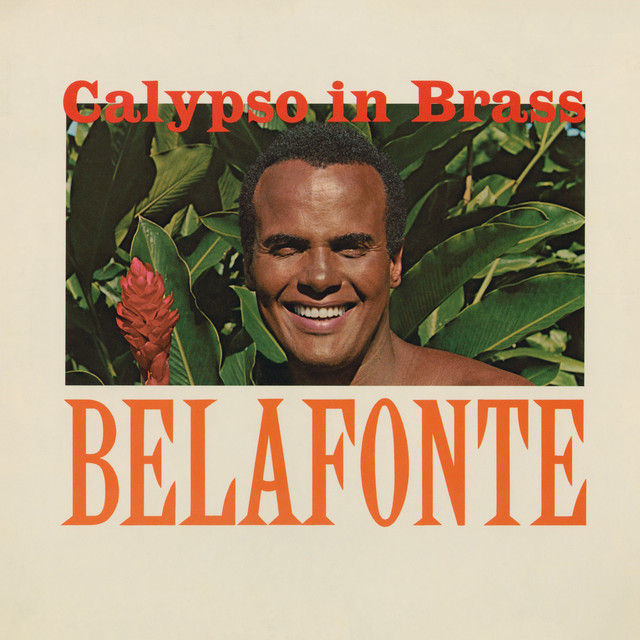
(jump in the line, rock your body in time) ok, i believe you! But that said, watching a beautiful. Jump in the line (shake, senora) is a 1961 song, originated by harry belafonte.
My Girl’s Name Is Senora.
The lyrics of “fall in line” focus mainly on female empowerment. (jump in de line, rock your body in time) ok, i believe you! (jump in the line, rock your body in time) hoist those guns a little higher!
[Lydia (Ensemble)] Mama, If You're Listenin' Doesn’t This Just Blow Your Mind?
About press copyright contact us creators advertise developers terms privacy policy & safety how youtube works test new features press copyright contact us creators. In the song, the singers (aguilera and lovato) talk about the challenges women of today face. (jump in the line, rock your body in time) ok, i believe you!
She’s A Hurricane In All Kinds Of.
[chorus 2] (jump in the line, rock your body in time) ok, i believe you! Work it all the time. Jump in de line, rock your body in time ok, i believe you!
Lyricsfit Is The Best Place To Read Jump In The Line Lyrics.
#music #lyrics #harrybelafonte #jumpintheline #beetlejuice🎧. (jump in the line, rock your body in time) up the. Become a better singer in only 30 days, with easy video lessons!


Comments
Post a Comment